

What is Digital Marketing? A Complete Beginner's Guide (2026)
- July 30, 2026
- Uncategorized
What Is Digital Marketing? A Complete Beginner's Guide (2026)
If you are wondering what is digital marketing, you are in the right place. Digital marketing helps businesses promote their products and services through online channels such as search engines, social media, websites, email, and online advertising.
Today, people spend a large part of their time online. Therefore, businesses need a strong online presence to reach potential customers where they already spend their time.
Unlike traditional marketing, digital marketing allows businesses to reach specific audiences, track results, and adjust campaigns based on real data. As a result, even small businesses can compete online with the right strategy.
In this beginner's guide, you will learn what digital marketing means, how it works, its major types, benefits, examples, tools, career opportunities, and how you can start learning it in 2026.
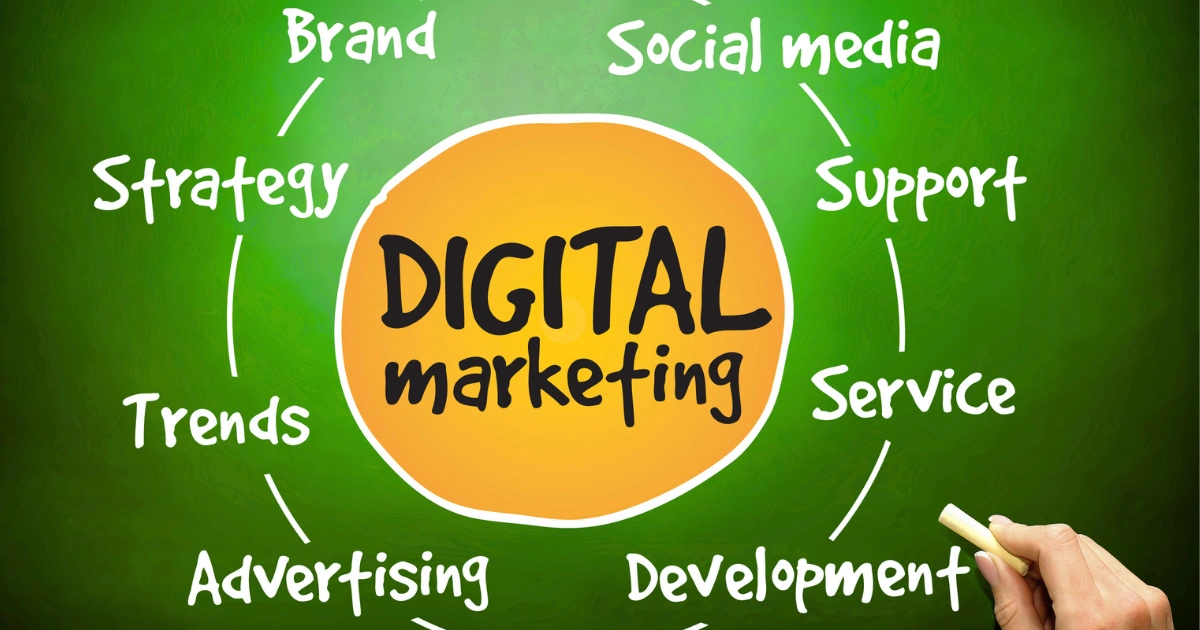
What Is Digital Marketing?
Digital marketing means promoting a business, product, or service through digital channels.
Businesses use different online platforms to attract people, communicate with customers, and generate sales.
These channels include:
- Search engines
- Websites
- Social media
- Online advertisements
- Mobile apps
- Video platforms
- Content platforms
For example, when someone searches for a product on Google and visits a business website, the business can use digital marketing to attract that visitor.
Similarly, a company can use Instagram to build brand awareness or email marketing to stay connected with existing customers.
Therefore, digital marketing covers many different activities, but they all focus on reaching and engaging people through digital channels.
What Is Digital Marketing and How Does It Work?
Now that you understand what is digital marketing, let's look at how the process works.
Digital marketing usually follows a simple customer journey:
Attract → Engage → Convert → Retain
First, businesses attract potential customers through search engines, social media, advertisements, or useful content.
Next, they engage those visitors by providing information that answers their questions or solves their problems.
Then, businesses encourage interested people to take an action. That action could include making a purchase, filling out a form, booking a call, or subscribing to an email list.
Finally, businesses continue communicating with customers to build long-term relationships.
As a result, digital marketing does not focus only on getting a sale. Instead, it supports the customer throughout the entire buying journey.
Why Is Digital Marketing Important?
Digital marketing has become important because customers now use the internet to research products, compare options, read reviews, and communicate with brands.
For example, a person who wants to buy a laptop may first search for product reviews. Then, they may watch videos, compare prices, and visit different websites before making a decision.
Therefore, businesses need to appear across these different touchpoints.
Digital marketing also gives businesses access to useful performance data. They can track website visits, clicks, leads, conversions, sales, and other important metrics.
As a result, marketers can understand what works and improve their campaigns over time.
Types of Digital Marketing
Digital marketing includes several major areas. Each area uses a different approach, but they often work together.
What Is SEO in Digital Marketing?
Search Engine Optimization (SEO) helps websites appear higher in search engine results.
Businesses create useful content, improve website structure, target relevant keywords, and build authority to attract organic traffic.
For example, a digital marketing agency can publish an article about "SEO tips for small businesses." Someone searching for that topic may discover the agency through Google.
Therefore, SEO can help businesses attract people who already search for information related to their products or services.
What Is Content Marketing in Digital Marketing?
Content marketing focuses on creating useful information for a specific audience.
Businesses can create:
- Blog posts
- Guides
- Videos
- Case studies
- Infographics
- Ebooks
- Podcasts
- Social media posts
For example, a fitness brand can publish workout guides, healthy recipes, and exercise tips.
Instead of directly asking people to buy, the brand provides useful information first. As a result, content marketing can help build awareness and trust.
What Is Social Media Marketing?
Social media marketing uses platforms such as Instagram, Facebook, LinkedIn, YouTube, and TikTok to connect with audiences.
Businesses can use social media to:
- Build brand awareness
- Share content
- Answer questions
- Promote products
- Generate leads
- Communicate with customers
Moreover, social media allows businesses to interact with customers directly.
For example, a restaurant can share new dishes, customer reviews, special offers, and behind-the-scenes videos.
What Is Email Marketing?
Email marketing allows businesses to communicate directly with people through email.
Businesses can send:
- Newsletters
- Product updates
- Special offers
- Educational content
- Welcome emails
- Follow-up messages
For example, an online store can send a welcome email after someone joins its mailing list.
Then, the business can send useful content and relevant offers over time.
Therefore, email marketing can help businesses build relationships and encourage repeat purchases.
What Is PPC Advertising?
Pay-per-click, or PPC, advertising allows businesses to pay for targeted online advertisements.
Google Ads and social media advertising platforms are common examples.
Businesses can target users based on factors such as keywords, location, interests, demographics, and online behavior.
For example, a local dentist can run ads for people searching for dental services in a specific area.
As a result, PPC can help businesses reach potential customers quickly.
What Is Affiliate Marketing?
Affiliate marketing allows businesses to work with partners who promote their products or services.
The affiliate usually receives a commission when their promotion generates a qualifying sale or action.
For example, a technology website can recommend a product and earn a commission when readers purchase it through an affiliate link.
Therefore, affiliate marketing can provide businesses with another way to reach new audiences.
What Is Influencer Marketing?
Influencer marketing involves working with creators who have an established audience.
Businesses can collaborate with influencers to promote products, services, or campaigns.
However, businesses should choose influencers based on audience relevance and credibility rather than follower numbers alone.
A smaller creator with a highly relevant audience may produce better results than a large creator with an unrelated audience.
What Is Video Marketing?
Video marketing uses video content to educate, entertain, or persuade an audience.
Businesses can create:
- Tutorials
- Product demonstrations
- Explainer videos
- Customer testimonials
- Short-form videos
- Interviews
- Webinars
Moreover, video can make complex topics easier to understand.
What Is Digital Marketing Strategy?
A digital marketing strategy is a plan that explains how a business will use online channels to achieve specific goals.
A basic strategy usually includes:
- Define business goals
- Identify the target audience
- Research competitors
- Choose marketing channels
- Create useful content
- Launch campaigns
- Track performance
- Improve the strategy
For example, a new business may focus on increasing brand awareness first. Later, it may focus on generating leads and increasing sales.
Therefore, your strategy should change as your business and audience develop.
How to Create a Digital Marketing Strategy
Step 1: Define Your Goals
Start with a clear goal.
Your goal might be:
- Increase website traffic
- Generate leads
- Increase online sales
- Build brand awareness
- Grow an email list
- Improve customer retention
A clear goal gives your marketing activities direction.
Step 2: Understand Your Audience
Next, identify your ideal customers.
Learn about their:
- Problems
- Goals
- Interests
- Buying habits
- Questions
- Preferred platforms
The better you understand your audience, the easier it becomes to create relevant marketing campaigns.
Step 3: Choose the Right Channels
You do not need to use every digital marketing channel.
Instead, choose channels based on your audience and goals.
For example, a B2B company may focus on SEO, LinkedIn, email marketing, and content marketing.
Meanwhile, a visual consumer brand may focus on Instagram, TikTok, video marketing, and paid advertising.
Step 4: Create Valuable Content
Your content should provide a clear benefit to the audience.
Answer questions, solve problems, explain difficult topics, and provide practical information.
However, avoid creating content only to fill your website or social media calendar.
Step 5: Measure Your Results
Finally, track your marketing performance.
Important metrics include:
- Website traffic
- Leads
- Conversion rate
- Click-through rate
- Engagement
- Sales
- Customer acquisition cost
- Return on investment
As a result, you can identify successful campaigns and improve weaker ones.
Benefits of Digital Marketing
Digital marketing offers several advantages for businesses of different sizes.
Reach a Larger Audience
The internet allows businesses to reach customers beyond their local area.
A small business can attract customers from different cities or even different countries.
Target Specific Customers
Digital advertising and other online channels allow businesses to target specific audience groups.
Therefore, businesses can focus their resources on people who are more likely to need their products or services.
Track Marketing Performance
Traditional marketing can make performance difficult to measure.
Digital marketing provides data about clicks, traffic, engagement, leads, and conversions.
Consequently, marketers can make decisions based on measurable results.
Build Brand Awareness
Regular online activity can help people become familiar with a brand.
Useful content, social media activity, and search visibility can all contribute to brand awareness.
Generate Leads
Businesses can use landing pages, forms, social media, content, and email marketing to collect leads.
Then, they can nurture those leads until they become ready to buy.
Increase Sales
Digital marketing can guide customers from their first interaction with a brand to the final purchase.
For example:
Search → Website → Content → Email → Product Page → Purchase
Therefore, different marketing channels can work together to support sales.
What Is Digital Marketing Compared With Traditional Marketing?
Traditional marketing uses channels such as television, newspapers, radio, billboards, and print advertising.
Digital marketing uses online channels such as search engines, websites, social media, email, and digital advertisements.
Here is a simple comparison:
| Digital Marketing | Traditional Marketing |
|---|---|
| Uses online channels | Uses offline channels |
| Provides detailed performance data | Often provides limited tracking |
| Allows precise targeting | Usually targets broader audiences |
| Supports real-time changes | Changes can take longer |
| Can work with smaller budgets | Some channels require larger budgets |
However, businesses do not always need to choose only one approach.
In some cases, traditional and digital marketing can work together to reach customers at different stages.
What Is Digital Marketing for Small Businesses?
Small businesses can use digital marketing to compete with larger brands.
They can start with affordable activities such as:
- Local SEO
- Social media marketing
- Content marketing
- Email marketing
- Google Business Profile optimization
- Organic search
- Small paid advertising campaigns
For example, a local restaurant can optimize its online presence, share food videos, collect customer reviews, and promote special offers.
As the business grows, it can invest more in advertising, content creation, and marketing automation.
Therefore, small businesses do not need a huge marketing budget to start.
Digital Marketing Tools Beginners Should Know
Beginners can use many tools to manage and measure digital marketing activities.
Common tool categories include:
- SEO tools
- Keyword research tools
- Analytics platforms
- Social media management tools
- Email marketing platforms
- Graphic design tools
- Advertising platforms
- Content creation tools
- CRM platforms
For example, analytics tools can show where website visitors come from and what they do on a website.
Similarly, SEO tools can help marketers research keywords and monitor search performance.
However, tools should support your strategy rather than replace it.
Digital Marketing Skills You Need in 2026
The digital marketing industry continues to change. Therefore, marketers need both technical and creative skills.
Important skills include:
SEO Skills
Learn how search engines work, how users search for information, and how businesses can improve organic visibility.
Content Writing
Learn how to create clear, useful, and engaging content.
Data Analysis
Understand important marketing metrics and use data to make better decisions.
Social Media Skills
Learn how different platforms work and how audiences interact with content.
Paid Advertising
Understand how to create, test, and optimize online advertising campaigns.
AI Skills
Learn how to use AI tools for research, content creation, analysis, automation, and productivity.
However, do not depend entirely on AI. Human creativity, strategy, judgment, and communication remain important.
Communication Skills
Marketers often work with customers, designers, developers, sales teams, and business owners.
Therefore, strong communication skills can help you explain ideas and collaborate effectively.
Digital Marketing Career Opportunities
Digital marketing offers many career paths.
You can specialize in areas such as:
- SEO
- Content marketing
- Social media marketing
- Performance marketing
- Email marketing
- Marketing analytics
- Marketing automation
- Growth marketing
- Digital strategy
For example, an SEO specialist focuses on organic search, while a performance marketer manages paid campaigns.
As you gain experience, you can move into roles such as Digital Marketing Manager, Growth Manager, Marketing Strategist, or Head of Marketing.
How to Start Learning Digital Marketing
If you are a beginner, you do not need to learn everything at once.
Instead, follow a simple process.
Start With the Basics
First, learn the fundamentals of SEO, content marketing, social media, email marketing, paid advertising, and analytics.
Choose One Area
Next, choose one specialization that interests you.
For example, you could start with SEO or content marketing.
Practice With Real Projects
Theory alone will not build strong marketing skills.
Create a website, start a blog, manage a social media page, or work on a small project.
As a result, you can develop practical experience.
Track Your Results
Measure traffic, engagement, leads, rankings, or conversions.
Then, use those results to improve your work.
Build a Portfolio
Finally, document your projects and results.
A strong portfolio can help you demonstrate your skills to clients or employers.
Common Digital Marketing Mistakes
Beginners often make a few common mistakes.
Trying Every Channel
Using every platform at once can make your strategy difficult to manage.
Instead, focus on the channels that match your audience.
Creating Content Without a Goal
Every important piece of content should support a clear purpose.
Therefore, define what you want the audience to learn or do.
Focusing Only on Traffic
Traffic matters, but it does not always generate revenue.
Also track leads, conversions, customers, and sales.
Ignoring Data
Marketing decisions become stronger when you use real performance data.
Review your metrics regularly and adjust your strategy.
Expecting Instant Results
SEO, content marketing, and organic social media often take time.
Therefore, stay consistent and use performance data to improve your approach.
Future of Digital Marketing in 2026 and Beyond
Digital marketing continues to evolve as technology and customer behavior change.
AI will play an increasingly important role in content creation, analytics, personalization, automation, and customer support.
At the same time, businesses will need to create more useful and authentic experiences.
Customers can easily ignore generic marketing messages. Therefore, brands need to understand their audiences and provide genuine value.
Short-form video, personalized experiences, social commerce, search changes, first-party data, and AI-assisted marketing will continue to influence the industry.
However, the core principle will remain the same: understand your audience, solve their problems, and communicate clearly.
Final Conclusion on What Is Digital Marketing
So, what is digital marketing? In simple terms, it is the process of using digital channels to reach customers, promote products or services, build relationships, and achieve business goals.
Digital marketing includes SEO, content marketing, social media, email, paid advertising, video, analytics, and several other activities.
However, successful digital marketing does not depend on using every channel. Instead, start by understanding your audience and defining your goals.
About us and this blog
We are a digital marketing company with a focus on helping our customers achieve great results across several key areas.
Request a free quote
We offer professional SEO services that help websites increase their organic search score drastically in order to compete for the highest rankings even when it comes to highly competitive keywords.
Subscribe to our newsletter!
More from our blog
See all posts


Recent Posts
- 10 Types of Digital Marketing Every Beginner Should Know September 17, 2026
- What is content marketing in digital Marketing? Benefits, Examples & Strategy July 30, 2026
- 15 Best AI Tools for Digital Marketing in 2026 July 30, 2026
Pingback: What Are the Types of Digital Marketing? Complete Guide- infinityRiseup